Early Marriage Prevention Through Girls’ Agency Not Just Age Laws
Early marriage prevention is most effective when girls have the agency, resources, and social support to shape their own futures—not when policy relies on age laws alone. Child marriage, generally defined as a formal marriage or informal union before age 18, affects millions of girls: UNICEF estimates that about 640 million women and girls alive today were married in childhood, and roughly 12 million girls marry before 18 each year. Laws that set a minimum age matter, but they cannot by themselves change poverty, gender inequality, safety concerns, or restricted access to education. Prevention therefore needs to combine legal protection with girls’ participation in decisions, continued schooling, economic opportunities, supportive services, and community-led change.
Girls’ agency shapes early marriage prevention
Girls’ agency is the ability to make and act on meaningful choices about one’s life, including education, relationships, health, and marriage. UNICEF’s work on adolescent empowerment emphasizes that agency is not simply an individual trait: it depends on whether girls have information, resources, freedom from coercion, and supportive relationships and institutions. In early marriage prevention, an agency-centered approach treats girls as rights-holders and participants, rather than only as recipients of rescue or protection.
The scale of the issue makes this approach urgent. UNICEF reports that the global prevalence of child marriage has declined over the past decade, but progress remains uneven and too slow to meet the Sustainable Development Goal target of ending child marriage by 2030. The United Nations’ 2024 progress assessment likewise warned that current progress would need to accelerate substantially. These figures describe a global pattern, not a uniform experience: risk and effective responses differ by country, region, household income, conflict exposure, and access to school and services.
Agency as meaningful choice and decision-making power
Agency means more than being told that a girl has a choice. A choice is meaningful only when she can express her preferences, access relevant information, and act without threats, violence, or overwhelming economic pressure. This connects child marriage prevention with bodily autonomy, informed consent, access to education, and participation in decisions affecting a girl’s future. A program can support agency by giving girls accurate information, confidential services, safe spaces to meet, and practical routes to continue learning or earn a livelihood.
Legal protection as a necessary but incomplete safeguard
A minimum-age law establishes a formal standard and can help prevent, document, and respond to child marriage. The United Nations Convention on the Rights of the Child defines a child as a person under 18, while the Convention on the Elimination of All Forms of Discrimination against Women calls for free and full consent to marriage and a minimum age set by law. Yet legal age provisions may have limited effect when exceptions remain, births and marriages are not registered, enforcement is weak, or unions are informal. Laws work best alongside accessible reporting and protection systems, social services, and community efforts that address the conditions driving marriage.
The causes that restrict girls’ choices
Early marriage is linked to intersecting pressures, including poverty, gender discrimination, interrupted schooling, insecurity, and social expectations about family honor or girls’ roles. UNICEF identifies child marriage as a complex problem rooted in gender inequality. In some settings, families may view marriage as protection from violence or as a way to reduce financial hardship; these decisions can occur within systems that give girls little control over whether or when they marry. Prevention should therefore address the underlying constraints rather than blame girls or families for responding to them.
Education and economic opportunity expand girls’ choices
Education and economic opportunity are practical foundations for agency. Remaining in school can widen girls’ future options, strengthen access to information and peer support, and make early marriage less likely in many contexts. The relationship is not automatic: school quality, safety, costs, transportation, and discriminatory rules all affect whether education is genuinely available. A prevention strategy should make schooling both accessible and worthwhile, while ensuring that married, pregnant, or parenting adolescents are not excluded.
Keeping girls in safe, inclusive education
School-based prevention includes removing fees and other attendance costs, providing safe transport and sanitation, preventing harassment, and creating pathways back to education after interruption. UNESCO’s work on gender equality in education highlights how unequal access and discriminatory expectations shape girls’ learning opportunities. Schools can also connect students with trained counselors and accurate health information. Attendance alone, however, is not a sufficient measure of agency: girls need learning environments where they are safe, respected, and able to participate in decisions about their education.
Skills, livelihoods, and social protection
Skills training, decent work opportunities, and social protection can reduce the financial pressures that narrow girls’ options. The World Bank has documented the economic consequences of child marriage, including effects on girls’ education, health, and later-life opportunities. These findings support investment in girls’ capabilities, but programs should not imply that a girl must earn money to deserve freedom from marriage. Economic initiatives are most useful when they complement legal rights, education, safety, and control over personal decisions.
Health information and confidential services
Age-appropriate, accurate information about sexual and reproductive health helps adolescents understand their rights and seek care. The World Health Organization identifies child marriage as a human-rights concern with serious implications for health and well-being, particularly where adolescent girls face early pregnancy or limited access to care. Health services should be confidential, respectful, and accessible without stigma. They should support girls’ health and safety without making them responsible for preventing the coercion or inequality that can lead to marriage.
Families and communities can change the conditions around marriage
Because marriage decisions are shaped by families and social expectations, prevention cannot rest on girls alone. Community-level work can help shift the beliefs and practical pressures that sustain early marriage, while ensuring that girls’ voices are not displaced by adult-led discussion. UNICEF and UNFPA’s Global Programme to End Child Marriage combines support for adolescent girls with engagement of families and communities, services, and policy action—an approach that reflects the need for change at several levels.
Engaging parents, caregivers, and community leaders
Constructive engagement gives parents, caregivers, teachers, faith leaders, and local organizations ways to discuss girls’ rights, education, safety, and the consequences of early marriage. Community dialogue is more credible when it recognizes families’ concerns—such as economic insecurity or fear of violence—and connects them with concrete alternatives. It should also challenge norms that treat girls’ futures as a family decision alone. The goal is not to stigmatize communities, but to build support for girls’ informed and freely expressed choices.
Girl-led groups and peer support
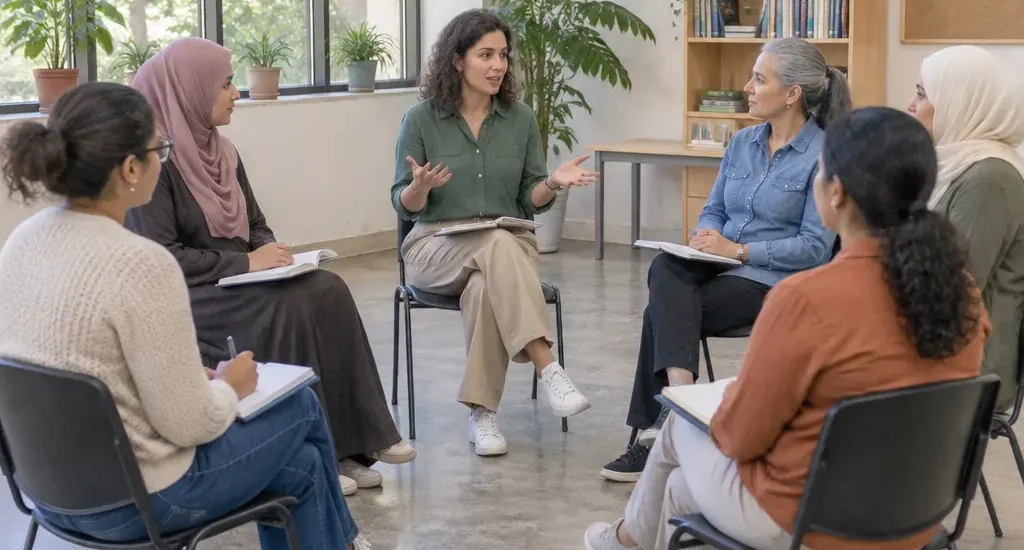
Girl-led clubs and peer networks can provide trusted places to share information, develop leadership, and find help. Their value depends on whether girls can participate safely and influence program decisions—not merely attend activities designed by adults. Facilitators should be trained to respond to disclosures of coercion or violence, protect confidentiality, and refer participants to appropriate services. Programs should also reach girls who are out of school, married, displaced, or otherwise excluded from conventional youth activities.
Responding to poverty, crisis, and displacement
Conflict, displacement, climate shocks, and household economic crises can disrupt schooling and weaken protection systems, increasing the pressures facing adolescents. The precise risks vary by setting, so responses should be based on local evidence rather than assumptions. Humanitarian programs can reduce exposure to harm by maintaining education, providing safe spaces and psychosocial support, strengthening child-protection referrals, and helping families access assistance. In every setting, girls should help identify what is unsafe and what forms of support are acceptable and useful.
Evidence, accountability, and real-world application
An agency-centered strategy should be judged by more than the number of laws passed or workshops held. Evaluation can track whether girls remain in school, can access services, participate in program decisions, report greater confidence in expressing preferences, and experience fewer coerced or underage unions. Data should be disaggregated by age, location, disability, income, and displacement status where safe and appropriate. Researchers and implementers should also guard against treating correlation as proof that one intervention alone caused a change.
The Global Programme to End Child Marriage
The joint UNICEF–UNFPA Global Programme to End Child Marriage illustrates a multi-level model. It supports adolescent girls’ skills and opportunities, engages families and communities, strengthens services, and works with governments on laws and policy. UNICEF’s reporting on the programme describes activities across multiple countries and emphasizes that progress depends on sustained, coordinated efforts. The model is relevant because it does not treat legal reform, community change, or girls’ development as substitutes for one another.
What to measure—and what not to overlook
Useful indicators include child-marriage prevalence and incidence, school retention and re-entry, access to adolescent-friendly health and protection services, and girls’ reported influence over decisions affecting their lives. Program teams should also measure unintended effects, such as increased stigma, retaliation, or exclusion of girls who are already married. A chart comparing child-marriage prevalence by region and household wealth can illustrate unequal exposure, while a trend chart can show whether progress is accelerating; both should clearly state the year, population, and data source. Global averages should never obscure local differences or be presented as current-year estimates unless the underlying data support that claim.
Conclusion: Put girls’ agency at the center of prevention
Early marriage prevention requires both enforceable age protections and the conditions that make girls’ choices real. Laws establish a vital boundary; education, health care, economic support, safe communities, and girl-led participation help girls exercise their rights. The global estimate of 640 million women and girls affected, alongside millions of girls entering marriage each year, shows why isolated interventions are not enough. Governments, schools, health providers, community organizations, and donors should fund coordinated, locally informed programs and include girls in their design and evaluation. Further reading from UNICEF, UNFPA, WHO, UNESCO, and the World Bank can help practitioners connect rights-based policy with practical, evidence-informed action.
Sources: UNICEF, Child Marriage, https://www.unicef.org/protection/child-marriage; UNICEF, Is an End to Child Marriage within Reach? Latest Trends and Future Prospects, 2023, https://data.unicef.org/resources/is-an-end-to-child-marriage-within-reach/; United Nations, The Sustainable Development Goals Report 2024, https://unstats.un.org/sdgs/report/2024/; United Nations, Convention on the Rights of the Child, https://www.ohchr.org/en/instruments-mechanisms/instruments/convention-rights-child; United Nations, Convention on the Elimination of All Forms of Discrimination against Women, https://www.ohchr.org/en/instruments-mechanisms/instruments/convention-elimination-all-forms-discrimination-against-women; UNFPA and UNICEF, Global Programme to End Child Marriage, https://www.unfpa.org/child-marriage; UNESCO, Gender Equality in Education, https://www.unesco.org/en/gender-equality/education; World Health Organization, Child Marriage, https://www.who.int/news-room/fact-sheets/detail/child-marriage; World Bank, Economic Impacts of Child Marriage: Global Synthesis Report, 2017, https://openknowledge.worldbank.org/handle/10986/249
